Clay Bar vs Car Polish: What Your Paint Actually Needs
Clay bar and car polish are two very different things that solve two very different problems. Here's what each does and when your car needs one, the other, or both.
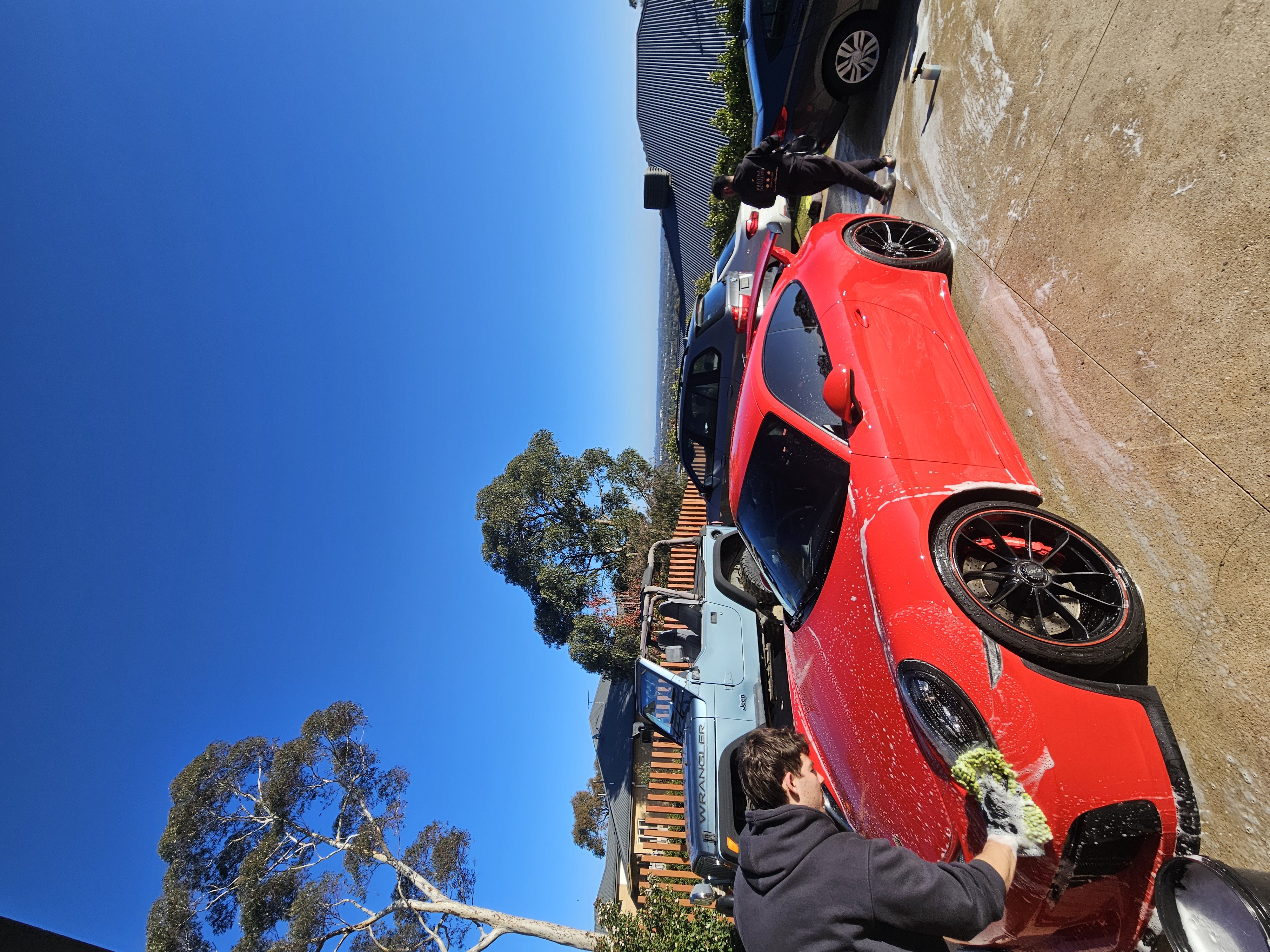
Clay bar and car polish are two of the most commonly confused detailing terms. They're often sold together and used in sequence, but they do completely different things. Understanding the difference tells you a lot about what's actually happening to your paint.
What Clay Bar Does
A clay bar is a piece of synthetic polymer clay that, when lubricated and rubbed across paint, physically pulls bonded contamination off the surface. This contamination is things you can't see but can feel:
- Industrial fallout and brake dust that embeds into the clear coat
- Tree sap residue
- Rail dust (iron particles from train lines — common in parts of Melbourne)
- Road tar
If you run a clean hand across your car's paint after washing it and it feels rough or grainy, that's surface contamination. A clay bar removes it, leaving paint that feels glass-smooth.
Clay bar does not remove scratches, swirl marks, or etching. It only removes bonded contamination from the surface. It's a decontamination tool, not a correction tool.
When you need it: Before applying any paint protection (wax, sealant, or ceramic coating), always clay bar first. Locking contamination under a protective layer defeats the purpose of the protection.
What Car Polish Does
Polish contains abrasives — very fine ones compared to sandpaper, but abrasives nonetheless. When applied with a machine polisher and the right pad, polish removes a microscopic layer of clear coat to level out scratches, swirl marks, and water etching.
Think of it like sanding a scratched piece of timber. You're removing the high points around the scratch until the surface is level and the scratch disappears into the surface.
There are different grades of polish for different depths of defect: - Light polish: removes swirl marks and water spots - Medium cutting compound: removes deeper scratches in the clear coat - Heavy cut: for oxidised, heavily scratched, or neglected paint
Machine polish is what produces the deep, reflective gloss you see in professional before-and-after photos. A hand-applied wax on top of swirly paint just makes the swirls glossier.
The Correct Order and Why It Matters
For a full paint decontamination and correction:
1. Wash — remove loose dirt and grime 2. Iron fallout remover — chemically dissolve bonded iron particles 3. Clay bar — physically remove remaining bonded contamination 4. Polish — correct scratches and swirl marks in the clear coat 5. Protection — wax, sealant, or ceramic coating
Skipping clay bar and going straight to polish means your polish is cutting through contamination as well as clear coat — using up your abrasives on the wrong thing and potentially grinding particles across the surface.
Skipping polish and going straight to protection means any existing defects are sealed in.
What Your Car Actually Needs
If your paint feels rough after washing but looks okay: Clay bar treatment, no polish needed.
If your paint has swirl marks visible in direct sunlight: Polish (machine), then protection.
If your paint is dull, oxidised, or heavily scratched: Multi-stage correction with compound and polish, then protection.
Before any ceramic coating application: Both. Always. Clay bar for decontamination, polish to correct and enhance the surface, then apply the coating to pristine paint.
If you're not sure where your car sits, a professional paint assessment is the first step. We can tell you what your paint actually needs — and what it doesn't — before spending money on the wrong process.